
Your vehicle’s tires are its only contact with the road. Keeping them in good shape is a non-negotiable part of safe driving.
The National Highway Traffic Safety Administration (NHTSA) reports that tire failure causes roughly 11,000 car crashes in the United States each year. Understanding their condition is a critical component of vehicle safety.
You should monitor your automobile for indicators of uneven tread wear or alignment problems. These issues can quietly compromise your overall handling and stability.
Maintaining proper air pressure is essential. It prevents premature damage and ensures your rubber performs reliably under various road conditions.
Recognizing the early clues of degradation helps you avoid costly repairs. It also ensures your vehicle remains secure for all passengers.
Key Takeaways
- Tire condition is a critical safety component directly linked to accident prevention.
- NHTSA data links approximately 11,000 annual U.S. crashes to tire failure.
- Regularly inspect for uneven tread wear and alignment issues.
- Consistent, proper tire pressure prevents premature wear and damage.
- Early recognition of tire problems saves money and enhances driving safety.
- Proactive maintenance is key to long-term tire performance and vehicle reliability.
Understanding Tire Wear and Safety
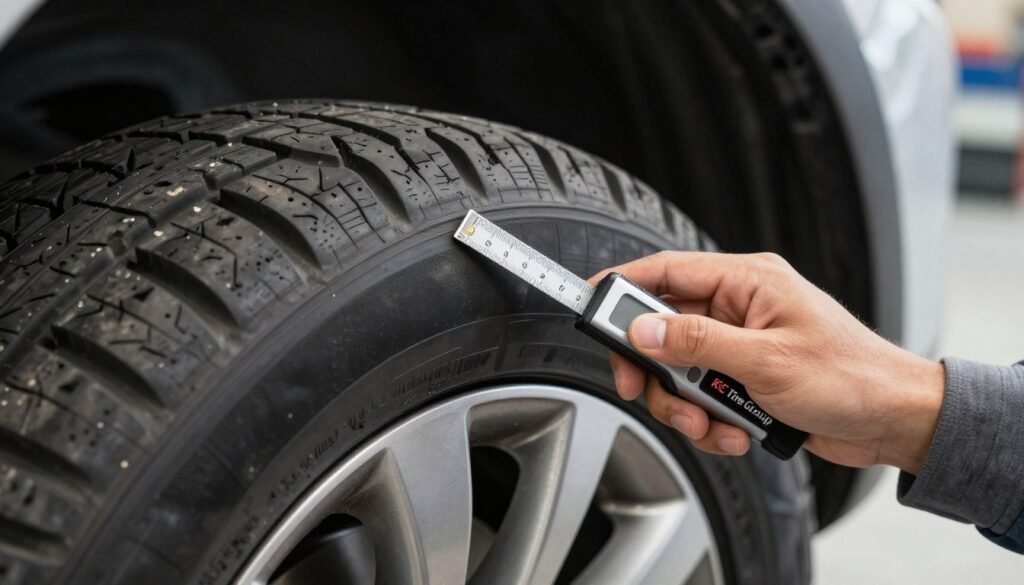
Evaluating tread depth and sidewall health are key steps in proactive vehicle care. These two areas reveal a lot about your tire’s condition and remaining life.
Regular checks help you spot problems before they become serious safety hazards on the road.
Recognizing Tread Wear and Tread Depth
Your tire’s grip depends on its tread depth. In the United States, the legal minimum is 2/32 of an inch.
Driving on tread shallower than this is risky. It greatly reduces wet weather traction.
Most tires have built-in wear bars. They become flush with the tread surface at that 2/32″ limit, giving you a clear visual cue.
Improper wheel alignment is a major cause of odd tread wear. It can scrub off rubber unevenly, forcing you to buy new tires prematurely.
Spotting Sidewall Damage and Irregular Wear
Always inspect the sidewall, the tire’s vertical face. Look for cuts, cracks, or unusual bulges.
This damage can weaken the tire’s structure. It may lead to a sudden blowout, especially during long trips.
Uneven wear patterns are a warning sign. They often point to suspension troubles or incorrect air pressure.
Addressing these underlying issues quickly protects your vehicle’s handling and your safety. It also extends the life of your tires.
5 signs you need to replace your tires
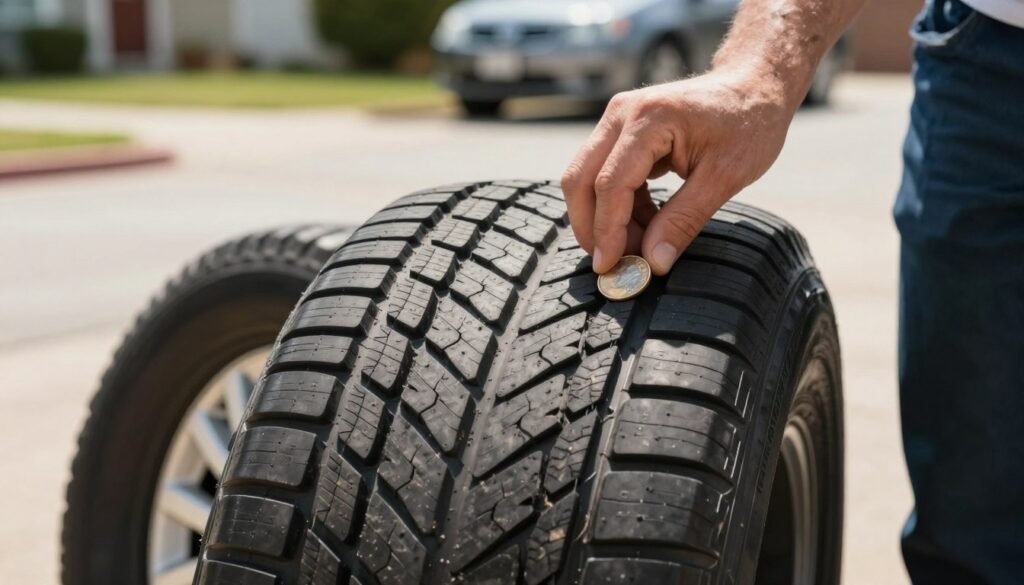
A simple coin from your pocket can reveal if your car’s tires are still safe for the road. This section covers two critical checks: tread depth and sidewall condition.
Using the Penny Test to Check Tread Depth
The penny test is a classic, do-it-yourself method. Insert a penny into the tread groove with Lincoln’s head pointing down.
If you can see the entire head, your tread depth is at or below 2/32 of an inch. This means it’s time to replace tires for better wet-weather grip.
Identifying Bulges, Blisters, and Cracks
Look closely at the tire’s sidewall. Bulges or blisters signal internal damage from impact. These weak spots greatly increase the risk of a sudden blowout.
Also, consider the tire’s age. Bridgestone advises taking any tire older than ten years out of service. You should get a new set of tires for optimal safety.
If you suspect a recall, call 1-844-293-7514 for replacement guidance. Staying proactive is the best way to ensure reliable performance.
How to Inspect and Assess Your Tires at Home
Just like scheduling regular health appointments, giving your tire a thorough inspection at home is a smart habit. Five-time Indy 500 veteran Johnny Unser compares this routine to a monthly dentist visit. It is the best way to catch small issues before they become big problems.
Performing a Visual Inspection
Start by looking closely at the rubber. Search for cracks, cuts, or any exposure of the inner cords on the sidewall. These flaws can lead to a sudden blowout.
Also, consider the tire‘s age. Even with good tread depth, a tire older than ten years should be taken out of service. It is simply time for a new set.
Remember to check air pressure regularly. A 10-degree Fahrenheit temperature drop can cause a loss of about 2 psi. Proper inflation is key for even wear and good traction.
Checking for Vibration and Uneven Wear
Pay attention to how your vehicle feels on the road. Excessive vibration through the steering wheel often signals a balance problem or internal damage.
Uneven tread wear patterns are another red flag. They frequently point to alignment troubles or incorrect pressure. Addressing these quickly protects your car’s handling.
Consistent maintenance helps you avoid the risk of failure. It ensures your vehicle performs reliably in all driving conditions for many more miles.
Deciding Between New and Used Tires
When the moment comes to get new rubber for your car, you face a common choice: brand-new or pre-owned? Shops like KC Tire Group offer both options to fit different budgets. Understanding the pros and cons helps you make a smart decision for your vehicle.
Benefits of Choosing New Tires
Opting for new tires brings peace of mind. You get a full manufacturer’s warranty and a predictable lifespan. There’s no hidden history of damage or uneven wear to worry about.
Fresh rubber delivers optimal performance from day one. Your car will have consistent handling and the best possible traction. This is especially valuable for varied driving conditions.
Risks Associated with Used Tires
Pre-owned tires can save money upfront, but they carry risks. Internal damage from past impacts might not be visible. This hidden weakness could lead to failure much sooner.
Without knowing the full service history, tread life is a guess. The rubber may be older than it looks, compromising safety. A professional inspection is essential if you consider this route.
For the best results, experts often recommend a new set on all four wheels. This ensures balanced performance. Trusted service providers can guide your replacement choice based on your needs.
Conclusion
Proactive tire care is an investment in your peace of mind every time you drive. Regularly inspecting tread wear and sidewall condition is the most effective way to keep your vehicle safe.
Follow the 2/32-inch depth rule and monitor for signs of aging. This prevents dangerous blowouts and improves traction on any road.
For optimal performance, install a complete set of four tires. This ensures balanced handling in all weather.
Whether selecting new tires or pre-owned options, a professional inspection protects your investment. Stay ahead with a consistent maintenance schedule.
Your automobile will deliver reliable service for many years and miles, giving you confidence on every journey.